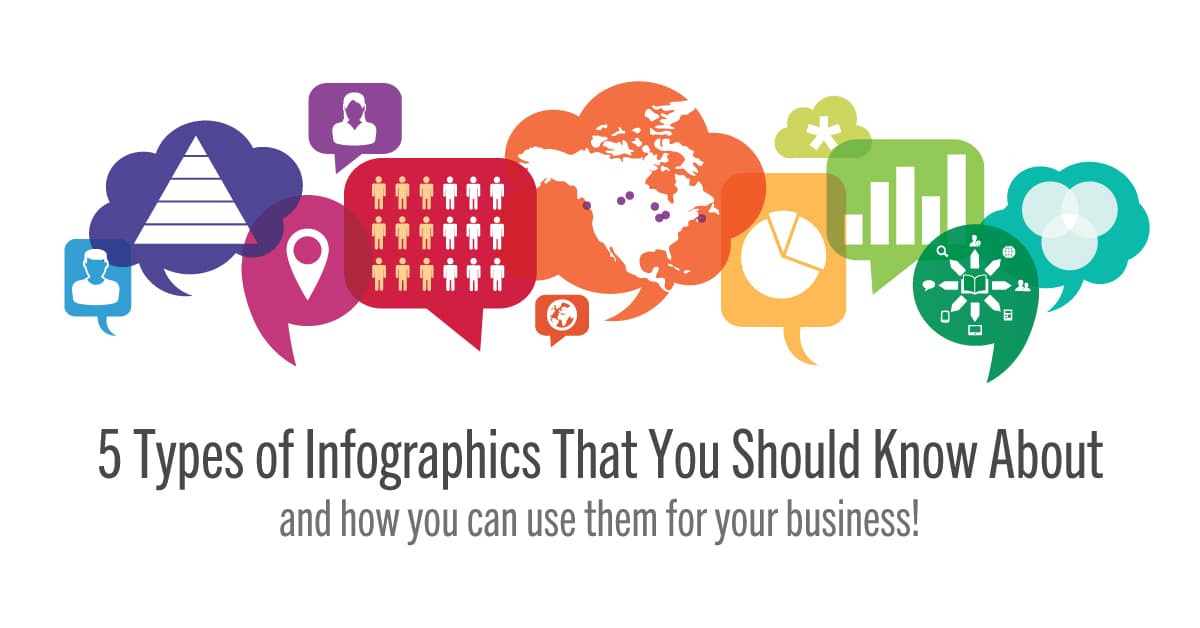
Below are five common types of infographics and how you can use them:
Comparison infographic
If you would like to compare two or more items using the same dimensions than a comparison infographic is up to the challenge. You can quickly showcase the differences or similarities of two or more items to give your readers a comparative view. Unbiased or persuasive, this type of infographic can be a powerful sales tool.
Geographic infographic
Sometimes data is related to a specific country, state, or city. In these cases using maps to highlight the location data will help your readers quickly understand the demographics or changes over time that you are presenting.
Hierarchical infographic
If you need to organize your information into related levels a hierarchical infographic will allow you to show items by priority and how they are related to the other items in the chart. Pyramids, timelines, and flow carts are examples of hierarchical infographics.
Breakdown infographic
When you want to break down a single topic into smaller parts you can use a breakdown infographic to illustrate the components, benefits, or services that exist under one larger umbrella.
Statistical infographic
This style will help you highlight large amounts of information like survey or research data. Using charts, graphs, and histograms you can share the over-arching results with your readers quickly and easily. Depending on what you want to accomplish, you may end up using a blend of infographic types and a variety of chart styles to convey your meaning. Just keep in mind that you are trying to tell a story with your data, so the type you select should blend with your overall message and deliver it with impact. Happy designing! TWG Communications has the experience you need to help you build infographics designed to effectively communicate your message, whatever it may be. Contact us today for more information on how TWG and our award winning, Infographic creating team can produce positive communication results for you.